Most people do not think about where their tea comes from. They boil water, add leaves, pour milk, and drink. But behind every cup of Kolkata chai is a journey that spans over a thousand miles, passes through some of the most challenging terrain in India, and involves hundreds of hands before it ever reaches your glass. Understanding this journey changes the way you taste tea.
Where It All Begins: The Tea Gardens
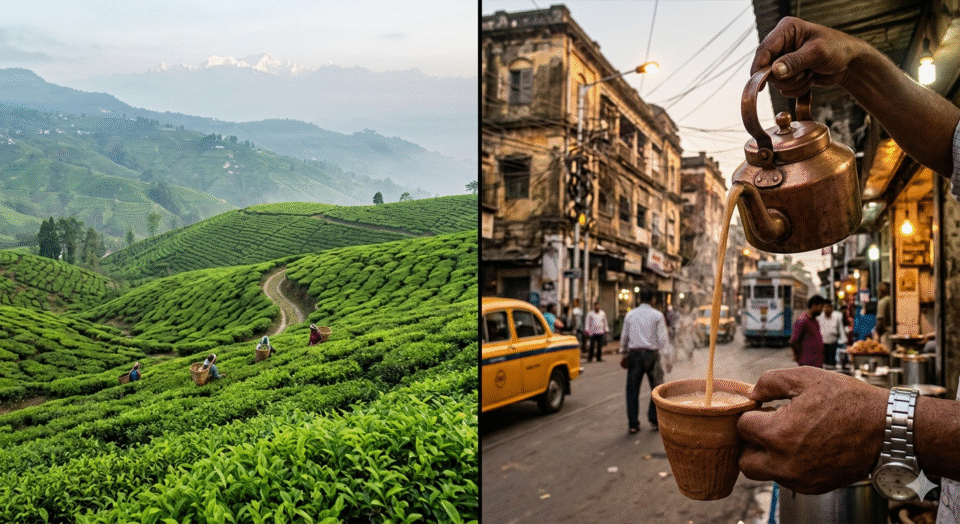
The tea that ends up in Kolkata’s chai stalls comes primarily from two regions: Assam and Darjeeling. These are neighboring states in India’s northeast, but their teas could not be more different.
Assam sits in the Brahmaputra River valley, a flat, hot, and humid landscape. The tea grown here is predominantly CTC, which stands for Crush, Tear, Curl. CTC processing produces small, dark granules that brew quickly and deliver a bold, malty flavor. This is the backbone of Kolkata’s street chai. It gives the tea its characteristic strength and dark color.
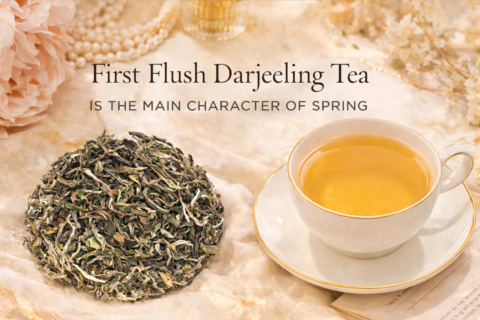
Darjeeling, on the other hand, is a hill station at altitudes ranging from 2,000 to 7,000 feet. The tea here is Orthodox, meaning the leaves are rolled whole rather than crushed. Darjeeling tea is lighter, more aromatic, and often carries floral or muscatel notes. It is considered one of the finest teas in the world.
The best Kolkata blends combine both. Assam provides the punch, and Darjeeling provides the fragrance. This combination is what separates a good cup from a great one.
The Harvest: Timing Is Everything
Tea is harvested in flushes. The first flush, which occurs between late February and April, produces the most delicate and aromatic leaves. The second flush, from May to June, yields a stronger, more full-bodied tea. For CTC production in Assam, the monsoon flush from July to September is the most prolific, producing the largest volumes.
The timing of the harvest directly affects what ends up in your cup. First flush Darjeeling is prized for its light, bright character. Second flush Assam is valued for its depth and robustness. Kolkata’s best tea vendors know this and adjust their blends seasonally, though most consumers never notice.
Processing: From Leaf to Granule
Once plucked, tea leaves begin to oxidize almost immediately. They must be processed within hours. In a CTC factory, the fresh leaves go through withering, where moisture is reduced. Then they pass through a series of CTC rollers that crush, tear, and curl the leaves into small, uniform granules. Finally, the granules are dried in industrial dryers until their moisture content drops below three percent.
Orthodox processing is gentler. The leaves are rolled by machines that mimic hand-rolling, preserving the leaf structure. They are then oxidized on trays in climate-controlled rooms before being fired in ovens. The result is a larger, more irregular leaf that brews more slowly but with greater complexity.
Both types are then sorted by grade, packed into plywood chests lined with aluminum foil, and sent to auction.
The Auction System: Kolkata’s Tea Exchange
This is where the journey gets interesting. Kolkata is home to one of the oldest and largest tea auction centers in the world. The Kolkata Tea Auction has been operating since the British era and remains the primary marketplace where tea from Assam, Darjeeling, and Dooars changes hands.
Buyers include large brands, small blenders, and exporters. The bidding is competitive, and prices fluctuate based on quality, season, and demand. A premium Darjeeling lot can fetch several hundred dollars per kilogram, while standard Assam CTC might sell for a fraction of that.
After purchase, the tea is transported to blending facilities where different grades and origins are mixed to create consistent, branded products. This blending process is both a science and an art. The goal is to produce a flavor profile that remains uniform across batches, despite natural variations in the raw material.
Distribution: The Last Mile
From the blending facility, tea is packaged and distributed across Kolkata’s vast network of retail shops, wholesale markets, and street vendors. The wholesale tea market in Kolkata, located near Burrabazar, is a chaotic, aromatic maze where hundreds of traders sell tea by the kilogram.
Street vendors typically buy their supply weekly from these markets. They develop relationships with specific traders and often have customized blends made to their specifications. This is why one chai stall can taste noticeably different from another just fifty meters away. The recipe is personal.
View Our Chaiolic Products
Why the Journey Matters
When you hold a clay cup of Kolkata chai, you are holding the end product of a chain that includes farmers in remote hill gardens, factory workers operating heavy machinery, auctioneers in century-old trading houses, blenders with decades of experience, and vendors who wake before dawn to light their stoves.
Every link in this chain affects the final taste. The soil where the tea grew, the altitude, the rainfall that season, the processing method, the blending ratio, the water used for brewing, and the vessel in which it is served. All of it converges in a single sip.
This is why tea from Kolkata tastes the way it does. It is not accidental. It is the product of geography, history, commerce, and craft. The next time you drink a cup, consider the thousand miles it traveled to reach you. It makes the experience richer.